
Proactive sub-slab gas testing during the initial phases of new construction is not merely a best practice; it is a critical, cost-saving measure that can prevent millions in expenditures. By identifying potential vapor intrusion risks early, developers and general contractors can integrate precision-engineered mitigation strategies into the project’s foundational design, avoiding expensive retrofits, project delays, and regulatory penalties that often arise from late-stage discoveries.
The Financial Imperative of Early Vapor Intrusion Assessment
The financial implications of environmental contamination, specifically vapor intrusion, are substantial when not addressed proactively. Delaying sub-slab gas testing until later construction phases or, worse, after occupancy, transforms a manageable engineering challenge into a complex and costly crisis. This reactive approach often necessitates disruptive and expensive interventions that could have been avoided with early, data-driven assessment.
Understanding the Cost of Reactive Mitigation
When vapor intrusion is discovered late in a project, the costs escalate dramatically. Imagine a scenario where a building is already framed, utilities run, and concrete foundations poured. A belated discovery of methane or VOC vapor intrusion under the slab means:
- Demolition and Redesign: Portions of the newly constructed building may need to be torn down to install a sub-slab depressurization system or a vapor barrier. This involves significant labor, material waste, and disposal costs.
- Project Delays: Each day a project is delayed incurs carrying costs, extended loan interest, liquidated damages, and lost revenue potential. These can quickly accumulate into millions, especially for large-scale commercial or residential developments.
- Regulatory Penalties and Legal Fees: Non-compliance with environmental regulations can lead to substantial fines from state and federal agencies. Furthermore, potential lawsuits from future occupants concerned about health risks add another layer of financial burden.
- Reputational Damage: A project plagued by environmental issues can severely tarnish a developer’s or contractor’s reputation, impacting future bids and partnerships.
Contrast this with early sub-slab gas testing. When testing is conducted during due diligence or site preparation, any necessary vapor mitigation system can be seamlessly integrated into the initial design. This might involve specifying a robust vapor barrier system, designing for a passive or active sub-slab depressurization system, or selecting appropriate foundation materials from the outset. These adjustments are significantly less expensive when made on paper rather than in concrete and steel.
Precision-Engineered Solutions: The Role of Data-Driven Testing
Effective sub-slab gas testing goes beyond simple qualitative checks. It demands a rigorous, data-driven approach to accurately characterize subsurface conditions and inform subsequent mitigation design. Licensed Professional Engineers (PEs) utilize a suite of advanced techniques to ensure comprehensive site assessment.
Core Components of Early Sub-Slab Gas Testing
1\. Site Assessment and Conceptual Site Model (CSM): Before any physical testing begins, a thorough review of historical site data, previous land uses, and geological surveys is performed. This informs the development of a CSM, predicting potential contaminants and their migration pathways.
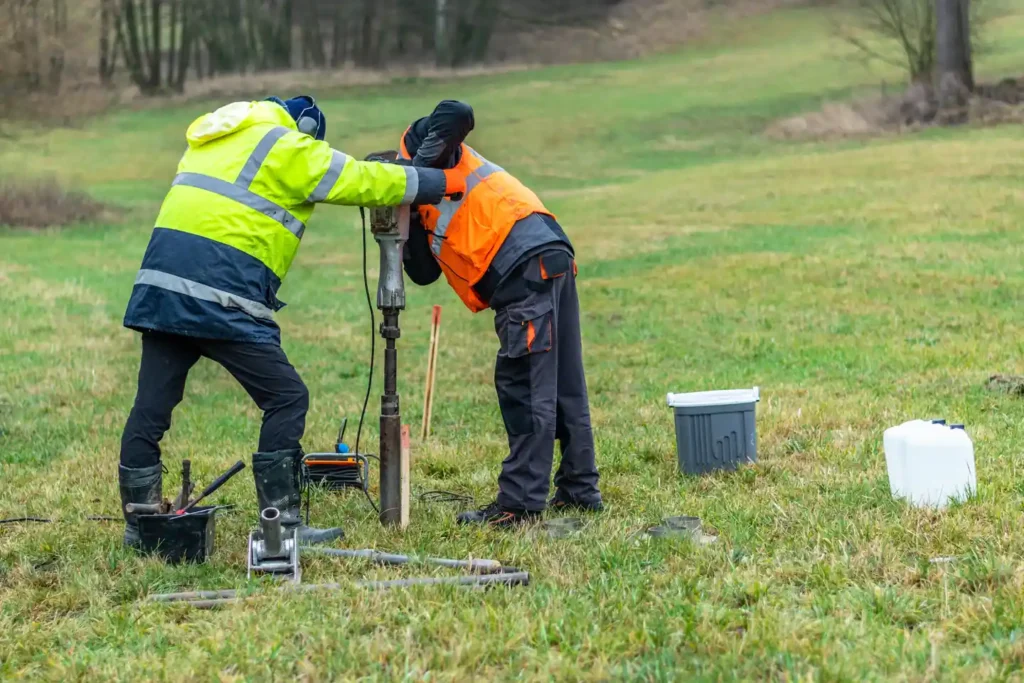
2\. Soil Gas Probes: Strategically placed soil gas probes are installed beneath the proposed slab footprint. These probes allow for the collection of sub-slab gas samples, which are then analyzed in a certified laboratory.
3\. Real-Time Monitoring: For certain volatile organic compounds (VOCs) or methane, real-time monitoring equipment can provide immediate, continuous data, offering a dynamic understanding of subsurface conditions and gas concentrations.
4\. Laboratory Analysis: Gas samples are analyzed for specific contaminants (e.g., methane, radon, trichloroethylene (TCE), tetrachloroethylene (PCE)). The precision of this analysis, backed by stringent quality control, is paramount for accurate risk assessment.
5\. Data Interpretation and Risk Assessment: The collected data is meticulously interpreted by environmental engineers. This involves comparing detected concentrations against regulatory screening levels and developing a quantitative risk assessment to determine the need for and scope of mitigation. This data-backed approach ensures that any recommended mitigation is precisely tailored to the site’s specific needs, avoiding both over-engineering and under-engineering.
This systematic process, guided by regulatory expertise and engineering excellence, provides the foundational data necessary for informed decision-making. It transforms potential liabilities into manageable design considerations.
Regulatory Fluency and Proactive Compliance
Navigating the complex landscape of environmental regulations across different states and municipalities requires specialized expertise. Early sub-slab gas testing is not just about identifying contamination; it’s about ensuring proactive compliance with a myriad of federal, state, and local requirements.
Shaping Industry Standards Through Early Intervention
Regulatory bodies like the EPA, alongside state environmental agencies, have stringent guidelines for vapor intrusion assessment and mitigation. These guidelines often dictate specific sampling protocols, analytical methods, and acceptable indoor air quality thresholds. A lack of regulatory fluency can lead to costly missteps, including:
- Incorrect Testing Protocols: Using methods that do not meet regulatory standards can invalidate data, requiring costly retesting and project delays.
- Inadequate Mitigation Design: A poorly designed system, not meeting performance specifications, may fail inspection or, worse, expose occupants to risk, leading to further remediation demands.
- Permitting Hurdles: Environmental permits are often contingent on a robust and compliant vapor intrusion assessment and mitigation plan. Early testing allows for the timely submission of these plans, preventing permitting bottlenecks.
By integrating sub-slab gas testing early, project stakeholders gain the advantage of working with comprehensive data that supports regulatory submissions. This proactive stance, informed by battle-tested expertise and an in-depth understanding of requirements across numerous jurisdictions, ensures that projects move forward smoothly, minimizing the risk of regulatory setbacks. It exemplifies the principle that sophisticated engineering, applied early, simplifies the path to compliance and project success.
In essence, early sub-slab gas testing is an investment that yields substantial returns. It is a testament to the fact that comprehensive due diligence and precision-engineered solutions, applied at the project’s inception, are standard for successful, multi-million dollar developments. It underscores the value of data-driven decisions and regulatory acumen in safeguarding both financial investments and future occupants.