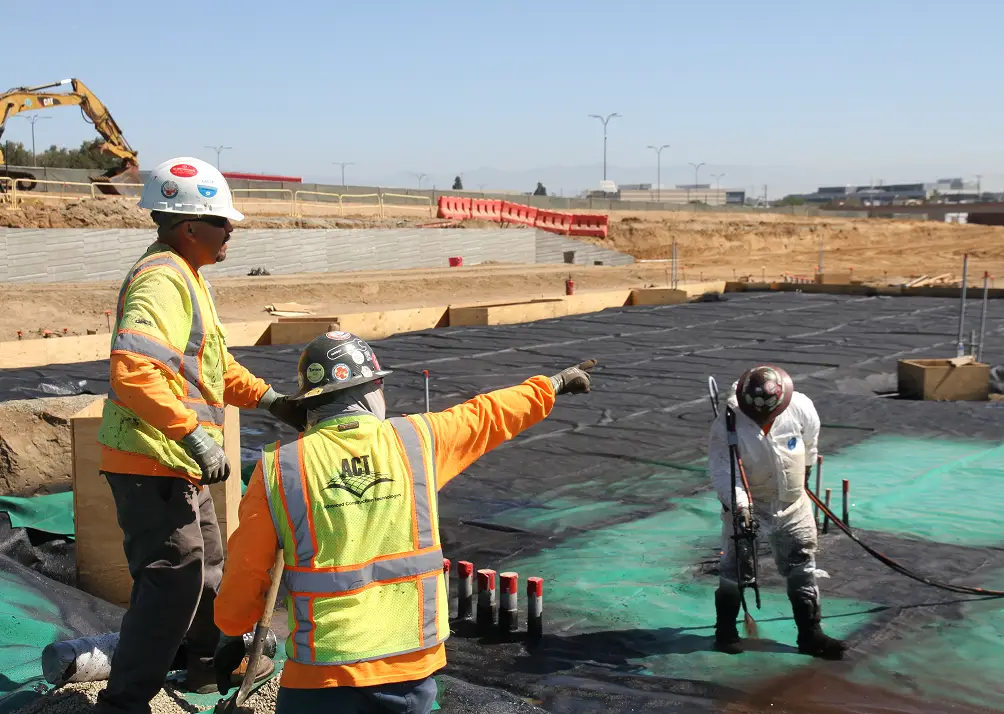

Blind-side waterproofing is a specialized protection method where the waterproofing membrane is installed before the structural concrete foundation is poured. Unlike traditional positive-side waterproofing, which is applied to the exterior of an existing wall, blind-side systems are fastened to the soil retention system (such as lagging, sheet piles, or shotcrete). This approach is essential for new construction projects in dense urban environments where property lines are tight and excavation space is limited. By utilizing materials like bentonite waterproofing systems, engineers can ensure a self-healing, high-performance barrier that prevents groundwater ingress and protects the structural integrity of the building.
The Mechanics of Blind-Side Waterproofing
In modern vertical construction, site constraints often make it impossible to excavate a wide enough perimeter to apply membranes to the outside of a finished wall. Blind-side waterproofing solves this by reversing the traditional sequence of operations.
The process begins with the installation of the membrane against the shoring or lagging. Once the reinforcement steel is placed, the concrete is poured directly against the membrane. This creates a mechanical bond between the concrete and the waterproofing layer, preventing water from tracking between the structure and the protective barrier.
Why Zero-Lot-Line Projects Require Blind-Side Solutions
For developers working on “zero-lot-line” projects—where the building footprint extends to the very edge of the property—blind-side application is the only viable path. Because there is no room for a “working side” excavation, the waterproofing must be “pre-applied.” This requires rigorous attention to detail during the lagging phase to ensure the substrate is sufficiently prepared to support the membrane without punctures or gaps.
Bentonite Waterproofing Systems: The Science of Self-Healing
One of the most reliable materials used in these applications is sodium bentonite. Bentonite waterproofing systems utilize a naturally occurring volcanic clay that expands up to 15 times its dry volume when exposed to moisture.
The Swelling Mechanism
When a bentonite-based membrane is hydrated, it transforms into a dense, impermeable gel. This expansion creates a high-pressure seal against the concrete. The most significant technical advantage of bentonite is its “self-healing” capability. If the membrane is punctured during the construction process or if the concrete develops minor shrinkage cracks over time, the bentonite expands to fill the void, maintaining the integrity of the seal.
Composite Membranes and Geotextiles
Modern engineering has evolved bentonite application from raw clay to sophisticated composite sheets. These often feature bentonite granules needle-punched between two layers of geotextile fabric or bonded to a high-density polyethylene (HDPE) geomembrane. This configuration ensures the clay remains in place during the pour and provides a secondary layer of protection against chemical contaminants in the groundwater.
Technical Considerations for New Construction Waterproofing
Successful new construction waterproofing depends on more than just material selection; it requires a data-driven understanding of the site’s hydrogeology and structural design.
Hydrostatic Pressure Management
Waterproofing is not merely a coating; it is a system designed to resist hydrostatic pressure. In areas with high water tables, the system must be PE-stamped to ensure it can withstand the specific pound-per-square-foot (PSF) pressure exerted by the surrounding environment. Without proper pressure-rated specifications, even the best materials can fail at the transition points.
Detailing and Transitions
The most common failure points in below-grade waterproofing are not in the field of the membrane, but at the “details”—tie-backs, penetrations, grade beams, and corners.
- Tie-back Covers: These must be custom-fitted to ensure the integrity of the blind-side barrier is maintained around shoring anchors.
- Waterstops: In construction joints, hydrophilic waterstops are often used in conjunction with the primary membrane to provide a multi-layered defense.
Integration with Vapor and Gas Mitigation
In many brownfield or urban redevelopment sites, waterproofing cannot be viewed in isolation. If the site has a history of industrial use, the waterproofing system may also need to serve as a VOC or methane barrier.
Integrating a bentonite or HDPE-based waterproofing system with a vapor-rated membrane requires precise engineering. This “dual-system” approach ensures that the building is protected from both liquid water ingress and the intrusion of hazardous soil gases. When these systems are designed in tandem, the result is a more robust, precision-engineered building envelope that meets both building code and environmental regulatory standards.
Quality Assurance and Specification Excellence
For developers and general contractors, the risk of below-grade leaks is a significant long-term liability. Rectifying a leak in a blind-side application after the building is complete is exponentially more expensive than the initial installation.
Industry best practices dictate a rigorous inspection schedule. This includes:
- Substrate Verification: Ensuring the lagging or shoring is smooth and free of sharp protrusions.
- Seam Integrity Testing: Verifying that all overlaps in the membrane are sealed according to manufacturer and engineering specifications.
- Third-Party Inspection: Utilizing independent inspectors to verify that the installation matches the PE-stamped design.
The Professional Standard in Environmental Protection
Navigating the complexities of below-grade moisture and gas intrusion requires a partner that understands the intersection of geology, chemistry, and structural engineering. Advanced Construction Technologies (ACT) provides the technical precision required for these high-stakes applications. By utilizing PE-stamped designs and data-driven material selection, ACT ensures that blind-side and bentonite waterproofing systems are not just installed, but engineered for the specific lifecycle of the structure. In an industry where “good enough” is a liability, adhering to rigorous engineering standards is the only way to ensure long-term performance and regulatory compliance.