
Commercial radon testing in California is the process of measuring indoor concentrations of radon gas—a naturally occurring, radioactive soil gas—within non-residential structures to ensure occupant safety and regulatory alignment. While California does not currently mandate universal testing for all commercial assets, specific sectors such as multi-family housing (HUD-financed), schools, and state-licensed care facilities face stringent requirements. For most business owners, testing serves as a critical component of due diligence, risk management, and adherence to the General Duty Clause of the Occupational Safety and Health Act, which requires employers to provide a workplace free from recognized hazards.
Understanding the Radon Risk Profile in California
Radon is a byproduct of the natural decay of uranium in soil and rock. While often associated with the “Radon Belt” of the Midwest and Northeast, California’s diverse geology creates significant localized risks. The California Department of Public Health (CDPH) has identified numerous “High Radon Potential” areas, particularly in the Sierra Nevada foothills, the Transverse Ranges, and portions of the Central Coast.
In a commercial environment, the “stack effect”—where warm air rises and escapes through the top of a building—creates a vacuum at the lowest levels. This pressure differential draws soil gases, including radon, through foundation cracks, utility penetrations, and expansion joints. Because modern commercial buildings are engineered for energy efficiency and often feature “tight” envelopes, radon can accumulate to hazardous levels if not properly managed through precision-engineered ventilation or sub-slab depressurization.
Workplace Radon Testing Requirements in California
Navigating the landscape of workplace radon testing requirements in California requires a distinction between mandatory compliance and proactive risk mitigation.
Mandatory Compliance Sectors
For certain asset classes, testing is not optional. Under the Federal Housing Finance Agency (FHFA) and HUD policies, any multi-family commercial property seeking Fannie Mae or Freddie Mac financing must undergo radon testing. Furthermore, specific California state mandates require testing in licensed childcare centers and certain state-owned buildings.
The Liability and Due Diligence Framework
For the broader commercial sector, the driver is often liability protection. Under Cal/OSHA guidelines, employers are responsible for monitoring and mitigating environmental toxins. High radon levels are a recognized carcinogen—the leading cause of lung cancer in non-smokers. Implementing a data-driven testing protocol demonstrates a commitment to occupant health and can be a vital component of a Phase I Environmental Site Assessment (ESA) during property transactions.
The Technical Process: How Commercial Testing Differs from Residential
Commercial radon testing in California is significantly more complex than residential “do-it-yourself” kits. Large-footprint buildings require a strategic approach governed by the ANSI/AARST (American National Standards Institute/American Association of Radon Scientists and Technologists) standards.
Data-Driven Sampling Protocols
The standard for commercial structures (ANSI/AARST MALB) dictates that testing must occur in every frequently occupied room in contact with the ground. This ensures that localized “hot spots”—caused by specific geological features beneath the slab—are not missed. In large open-plan warehouses or retail spaces, samples are typically taken every 2,000 square feet.
Measurement Methodology
Professional testing utilizes two primary device types:
- Passive Devices: Such as activated charcoal canisters or alpha track detectors, which remain on-site for 48 to 96 hours (short-term) or up to 90 days (long-term).
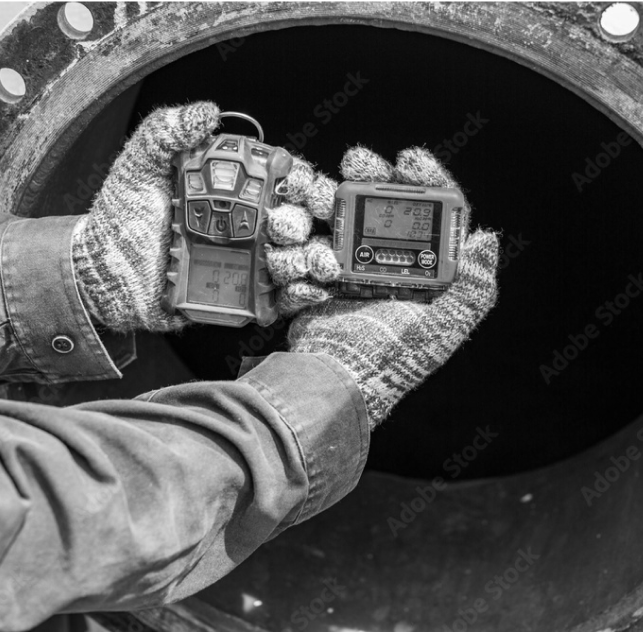
- Continuous Radon Monitors (CRMs): These electronic devices record hourly fluctuations in radon levels. This data is invaluable for commercial owners because it allows engineers to correlate radon spikes with HVAC operation cycles, providing a more nuanced view of the building’s performance.
Interpreting the Data: Action Levels and Specifications
The EPA and CDPH established an “action level” of 4.0 picocuries per liter (pCi/L). However, the World Health Organization (WHO) suggests a more conservative threshold of 2.7 pCi/L.
When results exceed these thresholds, the solution is rarely a simple fix. It requires a PE-stamped mitigation design. In commercial construction, mitigation often involves:
- Active Soil Depressurization (ASD): Using high-performance fans to create a vacuum beneath the slab, venting gases safely above the roofline.
- HVAC Manipulation: Adjusting the building’s pressure balance to ensure the interior remains slightly positive relative to the soil.
- Sub-Slab Vapor Barriers: In new construction, installing precision-engineered membranes that provide a physical block against gas ingress.
Integrating Radon Testing into Asset Management
For property developers and facility managers, radon testing should be viewed as a technical specification rather than a hurdle. Integrating testing into the standard maintenance or acquisition cycle allows for the identification of patterns. If a building shows rising levels, it may indicate a failure in the foundation’s integrity or an imbalance in the mechanical systems.
By utilizing professionals who understand the intersection of geology, building science, and California’s specific regulatory climate, owners can ensure their assets remain compliant and their occupants remain safe. Advanced Construction Technologies (ACT) provides the engineering excellence and regulatory fluency required to navigate these complex environmental challenges. With over 25 years of experience in the field, the team at Advanced Construction Technologies (ACT) delivers PE-stamped solutions that move beyond simple compliance into the realm of long-term environmental stewardship.